
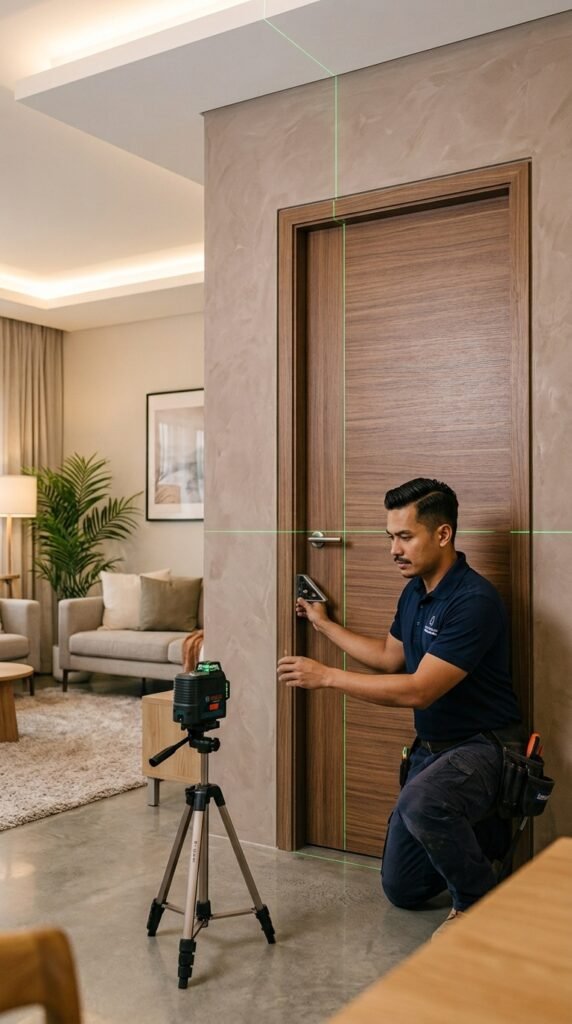
A door set — leaf, frame, and ironmongery — is only as good as its installation. A poorly hung door will bind, sag, or let in water and noise.
For a durable HPL Timber Door installation, this matters more than the finish. Below are five practices that lead to a door set that performs for years. Five practices cause callbacks, warranty disputes, or safety failures.
5 Good Practices
Check the opening before the frame goes in. Confirm the rough opening is plumb, level, and square before installing the frame — not after. Brickwork and RC openings in Malaysian construction are rarely perfectly true, and shimming a frame into an out-of-square opening is what causes doors to swing open or shut on their own months later.
2. Follow manufacturer clearance gaps. Every door — whether a Flat Oak, HDF Flush, or HPL door — is manufactured with a specific clearance tolerance around the leaf (typically a few millimeters at the head and sides, more at the bottom). Installers who “eyeball” the gap instead of following spec either jam the door in humid weather when timber expands, or leave gaps wide enough to fail acoustic and light-sealing expectations.
3. Match hinges and hardware to door weight and usage. A solid timber or fire-rated leaf is heavier than a hollow-core door and needs the correct number and grade of hinges to avoid sagging at the closing edge. Ironmongery selection isn’t cosmetic — it’s a load calculation.
4. Seal and finish immediately after installation. In Malaysia’s humidity, an unsealed or unpainted door edge absorbs moisture fast, causing swelling, warping, or delamination on laminate and veneer finishes. Edges should be sealed the same day the door is fitted, not left exposed while other trades finish the site.
5. Install fire-rated doors exactly to the certified configuration. Fire door performance is a system, not just a leaf — the frame, intumescent seals, hinges, closer, and gaps between leaf and frame are all part of what earns the certification. Installing a fire-rated door outside its tested configuration (wrong hardware, wrong gap, undercutting the bottom too much) can invalidate the fire rating even though the door itself is genuine.
5 Bad Practices
1. Using the wrong fixings for the substrate. Drywall or general-purpose screws into a timber frame, or the wrong anchor into a masonry opening, is a common shortcut that looks fine on handover and fails within a year as the frame works loose under daily use.
2. Skipping the spirit level and relying on “by eye.” A door that looks straight from a distance can still be several millimeters out of plumb — enough to cause the leaf to swing under its own weight or drag on the frame within weeks.
3. Forcing an oversized door into an undersized opening. Planing down a leaf on site to force a fit, without respecting the manufacturer’s clearance tolerances, changes how the door behaves seasonally and can void product warranty.
4. Installing before the building has settled or dried out. Fitting doors while wet trades (plastering, screeding) are still curing nearby exposes timber and laminate doors to excess ambient moisture, leading to warping after the site dries out and the door no longer sits flush.
5. Treating fire-rated doors like standard doors on site. Repainting over intumescent seals, swapping in non-rated hardware, or trimming the leaf beyond tested limits are practices installers sometimes apply out of habit — but on a fire door, each of these can compromise a certification that was tested as a complete assembly, not as individual parts.
More information please whatsapp +6011 – 6686 2426 or email to mebsuta.sales@gmail.com